
Sourcing vacuum sealers from China is one of the more reliable categories an importer can build a line around: the technology is mature, tooling is well understood, and component supply chains are deep. The hard part is not finding a supplier — a single search returns thousands. The hard part is telling a real manufacturer from a re-labeller, judging whether a quoted price reflects the actual build, and confirming the partner can hold quality across repeat orders. This checklist walks through what experienced buyers verify before placing a first PO.
Factory or Trading Company — and Why It Matters
The first question to settle is who you are actually buying from. Both factories and trading companies have a place, but the distinction changes your pricing, your lead time, and your control over quality.
A real factory owns the production line: injection moulding for housings, PCB assembly, vacuum pump integration, sealing-bar and heating-element assembly, and end-of-line testing. A trading company sources finished units from one or more factories and adds a margin. Some hybrids — like a manufacturer that also operates a trading arm — combine factory pricing on their own models with the convenience of consolidated sourcing.
Ways to tell which you are dealing with:
- Ask for the production process, not just the catalogue. A factory can describe its moulding, assembly, and QC stations; a pure trader usually deflects to “our partner handles that.”
- Check the business licence scope. A manufacturer’s licence lists production; a trading company’s lists import/export and wholesale only.
- Match the address to the activity. A registered workshop with floor space differs from an office in a commercial tower.
- Test technical depth. Questions about pump vacuum level (kPa), seal-bar width, duty cycle, or motor wattage get precise answers from engineering-led suppliers.
Specifications That Reveal Build Quality
Price comparisons are meaningless without spec parity. Two external vacuum sealers can look identical and differ 40% in cost because of what is inside. Pin these down in writing before you compare quotes.
Vacuum and Sealing Performance
- Vacuum strength — external sealers typically reach -60 to -90 kPa; chamber machines go deeper. Ask for the measured figure, not the marketing one.
- Seal-bar width — a 3mm single seal is entry-level; 4mm or dual seals hold better for liquids and bulk packing.
- Duty cycle — consumer units need rest between cycles; commercial units run continuously. Confirm the rated cycles-per-hour for your use case.
Construction and Components
- Pump type (diaphragm vs piston/rotary-vane for chamber units) and its rated lifespan.
- Housing material and whether moisture-detection or a drip tray is included.
- Motor wattage and the voltage/plug variants supported — 110V/220V and regional plug heads matter for your destination market.
Certifications by Destination Market
A vacuum sealer is a mains-powered heating appliance, so the right certificates are not optional — customs and retail buyers will ask. Required marks depend on where you sell:
- European Union: CE marking, plus RoHS for restricted substances and often a LVD/EMC test report behind it.
- United States: FCC for electromagnetic compliance; UL or ETL listing is expected by most retailers and big-box channels.
- United Kingdom: UKCA alongside or instead of CE, depending on current rules.
- Food contact: if you also supply the embossed bags or rolls, ask for LFGB or FDA food-grade documentation on the film.
Ask for the certificate number and the test-report PDF, then verify the report covers your exact model and voltage variant — a certificate for a sister model does not transfer automatically.
MOQ, Samples, and OEM/ODM Flexibility
Minimum order quantity tells you how a supplier is set up. A factory running its own lines can usually offer a workable MOQ on stock models and a higher one for fully custom tooling. Clarify these points early:
- Stock vs custom MOQ. Buying an existing model with your logo (OEM) carries a far lower MOQ than a new mould or housing (ODM).
- Tooling cost and ownership. For custom housings, confirm who owns the mould after it is paid for.
- Sample policy. Always buy pre-production samples. Expect to pay for them and for freight — a supplier that won’t sample is a red flag.
- Customisation depth. Logo and packaging is easy; control-panel layout, colour, accessory kits, and manual translation separate flexible factories from rigid ones.
For a first relationship, a starter run on a proven stock model with your branding lets you test quality and the channel before committing to custom tooling.
Auditing Quality and Reliability
The lowest quote often hides the highest total cost once returns and warranty claims land. Build verification into the process rather than trusting the quote:
- Request the QC flow. Serious suppliers test seal integrity and vacuum draw on a sampling basis and run a high-voltage/insulation check on every mains unit.
- Commission an inspection. A third-party pre-shipment inspection (AQL sampling) is cheap relative to a bad container.
- Confirm the warranty. A credible manufacturer stands behind its build — a 12-month warranty signals confidence and clarifies who covers defects.
- Check export experience. A supplier shipping to dozens of countries has already solved labelling, voltage, and documentation problems you’d otherwise hit cold.
Pulling the Checklist Together
The strongest position for an importer is a direct, factory-level relationship where pricing reflects the real build, specifications are documented, certificates match your market, and quality is verified before the goods ship. Trading companies can be useful for consolidation, but for a category you intend to scale, knowing exactly who builds your units — and being able to talk to their engineers — pays off on every reorder.
Talk to the factory. As a Guilin-based vacuum-sealer manufacturer and trading company shipping to 56+ countries with OEM/ODM support, low MOQs, and a 12-month warranty, we’re happy to walk you through specs, certificates, and samples. Browse our vacuum sealer range or request a quote and we’ll reply with real numbers, not boilerplate.
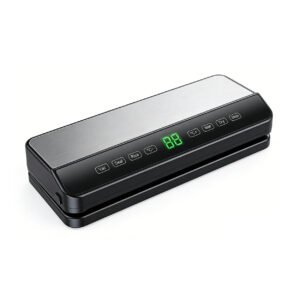
Featured model
Vacuum Sealer, 65kPa, 30 cm Seal, Roll Storage (VS-TGX4)
This vacuum sealer is made direct-from-factory and offers 65kPa and 30 cm seal, featuring roll storage, from Guilin Prime Household Products. Available OEM/ODM with low MOQ…
from $14.00
Similar products
Vacuum Sealer, 65kPa, 30 cm Seal, Roll Storage, Temp Control
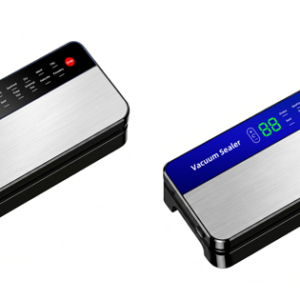
Vacuum Sealer, 70kPa, 30 cm Seal, 10 Modes, 120W
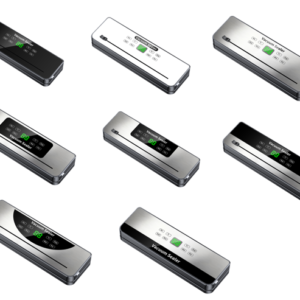
Vacuum Sealer, 75kPa, 30 cm Seal, Touch Screen, Temp Control
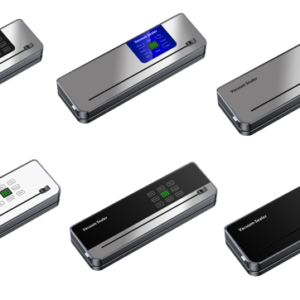
Vacuum Sealer, 75kPa, 30 cm Seal, Temp Control
Ready to order or need a wholesale quote?
Guilin Prime Household Products Co., Ltd. manufactures these vacuum sealers direct from our Guilin, China factory — OEM, private-label and B2B orders welcome. Tell us your target market and quantities for a factory-direct quote within 24 hours.