

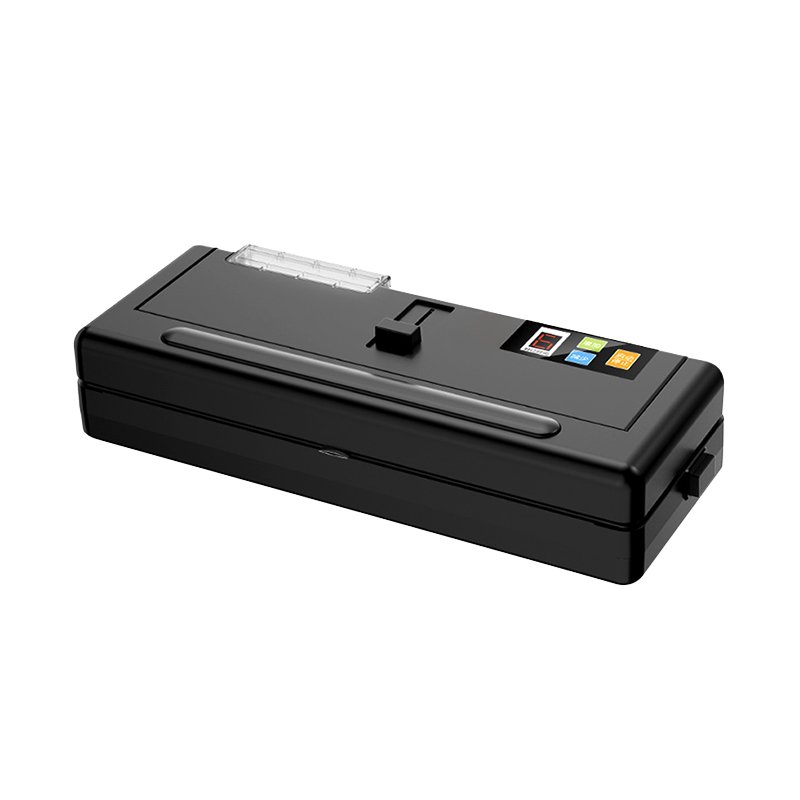
One weak seal turns a $31 automatic vacuum sealer into a warranty claim, a one-star review, and a distributor who quietly stops reordering — so the figure that should decide your purchase order is seal integrity under real duty, not the headline suction number. An automatic vacuum sealer is a countertop machine that draws air out of a bag and heat-seals it in a single button-press; for an importer, the right vacuum sealer is the one that holds its seal through 500 cycles a day without drifting. This guide explains what 80 kPa of suction actually buys you, how an external sealer differs from a chamber machine, and exactly what to verify before you place a private-label order.
// 01 — Key takeaways
Key takeaways
Measured suction at the nozzle — the top of the practical range for an external home-and-light-commercial sealer, deep enough to pack dense, moist cuts without crushing them.
Rated for 24-hour continuous operation at roughly 500 seals per day — a light-commercial duty cycle, not a once-a-week home rating.
Seal-bar width, wide enough for bulk-portion and family-size bags.
Factory-direct minimum order, with OEM/ODM branding and a 12-month warranty.
Countries we have shipped to direct since 2005 — you buy from the factory, not a trading chain.
// 02 — Suction
How much vacuum suction do you actually need?
For dry and semi-moist foods, 60–80 kPa of suction is the range that matters; 80 kPa sits at the top of it. Beyond that, an external sealer stops adding shelf life and starts risking crushed product, so the honest answer is: enough, measured at the nozzle, not the biggest number on the carton.
What 80 kPa means at the nozzle
Suction on an external vacuum sealer is quoted in kilopascals (kPa), and the reference point is simple: one atmosphere is about 100 kPa, so a machine rated at 80 kPa removes roughly 80 percent of the air around the food. Independent buyer guides note that most home sealers sit at 60–80 kPa, equivalent to about 18–24 inches of mercury (Giraffyco spec guide). At 80 kPa this model is at the strong end of that band — deep enough to draw down dense proteins and reduce freezer burn, which the USDA confirms is the practical benefit of removing oxygen from frozen storage (FDA cold-storage chart).
When more suction stops helping
Chasing the highest kPa figure is a common purchasing mistake. Past roughly 80 kPa on an external machine, extra suction crushes bread, berries and portioned meat rather than preserving it better, and it does nothing for liquids — an external sealer will pull soup or marinade straight into the pump if you let it. The measurable win from vacuum sealing comes from the anaerobic, oxygen-free environment it creates, and that is reached well before the suction gauge maxes out.
Reading a suction spec sheet honestly
A vacuum sealer’s suction figure only means something paired with an air-flow rate and a duty rating. This unit draws at 12 L/min (±15%) and is rated for continuous use, so it reaches its 80 kPa target quickly and repeatably rather than on a single showroom pull. When you audit a supplier’s spec sheet, ask for suction, flow rate and the rated seals-per-day together — a headline kPa number with no duty rating behind it tells you almost nothing.
// 03 — Specifications
The UAHFW14 vacuum sealer spec sheet
The specification below is the exact configuration we ship. It is a 150 W external automatic sealer with an 80 kPa pump, a 28 cm five-layer heating strip and a universal 100–220 V input for mixed export markets.
Core performance specifications
Model UAHFW14 · Rev. 2026.07
| Specification | This model | Why it matters to your buyer |
| Vacuum suction | 80 kPa | Top of the external range; deep draw-down without crushing |
| Seal-bar width | 28 cm | Handles bulk-portion and family-size bags |
| Heating strip | 4 mm, five-layer | Wider weld line resists leaks on the retail shelf |
| Rated power | 150 W | Sustains back-to-back cycles at ~500 seals/day |
| Air-flow rate | 12 L/min ±15% | Fast, repeatable pull-down, not a one-off figure |
| Voltage | 100–220 V (50–60 Hz) | One SKU covers most export destinations |
| Housing | ABS | Impact-resistant; ready for your colourway |
What each number means on the shelf
Read together, the specs describe a light-commercial external sealer built for repeat use: enough suction and seal width for a butcher’s counter or a meal-prep kitchen, a wide five-layer weld to keep seals intact through cold-chain handling, and a universal voltage input so a single model can be shipped to buyers across different grid standards. Operator controls include button operation, a controllable vacuum-degree mode, a detachable drip tray and a filtered liquid-extraction container for occasional moisture.
// 04 — Comparison
External vs chamber: which type should you stock?
Stock an external automatic sealer like this one for home, meal-prep and light-commercial buyers who mostly pack dry and semi-moist food; reserve a chamber machine for customers who seal liquids and soups in volume. They are different categories serving different price points, not better-or-worse versions of each other.
| Type | How it removes air | Best for | Bag cost | From $/unit |
|---|---|---|---|---|
| External automatic This model | Draws air through the bag’s open end | Dry & semi-moist, home to light-commercial | Embossed / channel bags | $31 |
| Chamber | Evacuates the whole chamber around the bag | Liquids, soups, high-volume kitchens | Cheaper smooth bags | Higher |
| Handheld / cordless | Small pump through a valve or nozzle | Occasional home use, zip-top bags | Zip-valve bags | Lower |
The external automatic (this model)
An external vacuum sealer pulls air out through the open end of the bag and then welds it shut. It is compact, affordable and the right fit for the largest slice of the retail market — households, meal-preppers and small food businesses packing portioned meat, cheese and dry goods. Independent comparisons place external suction sealers as the best value for dry foods and home use (SEFA KitchenBiz).
The chamber machine
A chamber sealer places the whole bag inside a sealed box and evacuates the air around it, which lets it pack soups, marinades and liquids without pulling them into the pump. It uses cheaper smooth bags and suits high-volume commercial kitchens — but it is larger, heavier and sits at a higher price point, so it serves a different buyer than an external countertop unit.
The handheld or cordless option
Handheld sealers use a small pump and a valve to draw air from zip-top bags. They are the entry tier: convenient for occasional home use, but not built for the seal integrity or duty cycle a distributor’s customers expect from a daily-driver machine.
// 05 — Manufacturing
How we manufacture this vacuum sealer
Every UAHFW14 is designed, tooled, assembled and line-tested in our own Guilin facility. Because we control tooling, components and finish in-house, OEM and ODM requests are handled directly rather than passed down a trading chain — the unit you private-label is the unit your customer relies on.
In-house tooling & molding
The ABS housing is molded on our own tooling, so your colourway, logo placement and retail packaging are engineered in from the first shot — not retro-fitted by a middleman.
Pump & PCBA assembly
The 80 kPa pump and control board are assembled and powered up in-house, then matched to the five-layer heating strip that does the real work of a leak-free weld.
Seal-integrity & vacuum QC
Every batch is run through line testing before it ships — suction is checked against the 80 kPa target and seals are pull-tested, so failures are caught on our floor instead of on your buyer’s shelf.
Compliance & warranty
We build to the CE, RoHS and FDA-relevant standards for household appliances and supply the specific marks and test reports for your destination market, backed by a minimum 12-month warranty. Certifications vary by product line and market — see our Trust Center for what we can document for your order.
“We are the factory, not a broker. When a buyer opens a carton in Rotterdam or Riyadh, the seal has to hold — so we pull-test before it leaves Guilin, and we put our own warranty behind it.”
— Mi Lan, Founder, Guilin Prime Household Products Co., Ltd.
// 06 — Sourcing
Sourcing it: MOQ, lead time and certification
This model ships factory-direct at a minimum order of 500 units, from $31 per unit, with OEM/ODM branding and a 12-month warranty. Below is what to confirm with any vacuum sealer supplier before you commit a purchase order.
Minimum order and lead time
Our standard MOQ on the UAHFW14 is 500 units. Industry buyer guides note that Chinese vacuum sealer MOQs commonly start near 100 units with 15–30-day lead times, and advise confirming the minimum per colour or configuration, not just per order (factory-audit checklist). We recommend requesting a sample before your first production run so your team can pressure-test the seal on your own bags.
Certifications by market
The marks you need depend on where you sell: CE and RoHS for Europe, FCC for the United States, and FDA-relevant compliance for food-contact parts. Ask your supplier to supply the certificates and test reports that match your destination — missing documentation is a common cause of customs delays and channel-listing rejections, so the paperwork should travel with the goods.
Logistics and container loading
Packed six to a carton at a 0.052 CBM carton volume, the UAHFW14 loads efficiently for sea freight, which keeps your landed cost per unit stable across a full-container order.
// 07 — Shelf life
How long does vacuum-sealed food actually last?
Vacuum sealing typically extends shelf life by three to five times versus conventional storage: foods that keep 6–12 months in a normal freezer can hold 2–3 years vacuum-sealed, because removing oxygen slows the microbes and freezer burn that spoil frozen food.
Freezer and fridge shelf life
The mechanism is straightforward: most spoilage organisms need oxygen, so an anaerobic, air-free bag slows them down, and the USDA’s own guidance frames vacuum sealing as a practical way to take advantage of seasonal bulk and cut freezer burn (USDA Food and Nutrition Service). For frozen storage, the USDA reference temperature is 0 °F (−18 °C); vacuum-packed bags should be stored flat.
The food-safety caveat worth printing on the box
Vacuum sealing slows spoilage; it does not sterilise. Hot, perishable foods must be cooled to 41 °F (5 °C) or below before they are vacuum-packed and kept refrigerated, because an oxygen-free bag can favour certain anaerobic bacteria if food is temperature-abused. A short, honest care note on your retail packaging protects both the end user and your brand.
// 08 — FAQ
Frequently asked questions
Is 80 kPa enough suction for a vacuum sealer?
Can this external vacuum sealer handle liquids?
What is the minimum order quantity and lead time?
Do you offer OEM and private-label branding?
Which certifications does the vacuum sealer carry?
// 09 — Featured model
The model in this guide
// Model UAHFW14
Automatic Vacuum Sealer, 80kPa, 28 cm Seal, Manual Nozzle
150 W · 80 kPa · 28 cm five-layer strip · 100–220 V · rated ~500 seals/day
From $31 / unit · MOQ 500
// 10 — Bottom line
The bottom line for vacuum sealer buyers
For most retail and distribution buyers, an 80 kPa external automatic vacuum sealer is the sweet spot: enough suction and seal width for the bulk of the market, a light-commercial duty rating, and a landed cost that holds up at container volume. Buy on seal integrity and a real duty cycle rather than the biggest suction number, confirm the certifications for your market, and order a sample before your first run. As the factory behind the UAHFW14 — not a broker — we can put our tooling, our line testing and our 12-month warranty behind that decision. Learn more about our factory or request a quote below.
Featured model
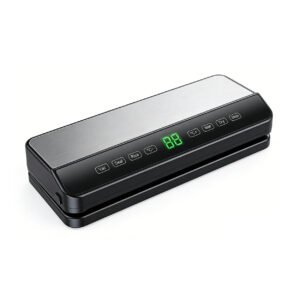
Vacuum Sealer, 65kPa, 30 cm Seal, Roll Storage (VS-TGX4)
This vacuum sealer is made direct-from-factory and offers 65kPa and 30 cm seal, featuring roll storage, from Guilin Prime Household Products. Available OEM/ODM with low MOQ…
from $14.00
Similar products
Vacuum Sealer, 65kPa, 30 cm Seal, Roll Storage, Temp Control
Vacuum Sealer, 70kPa, 30 cm Seal, 10 Modes, 120W
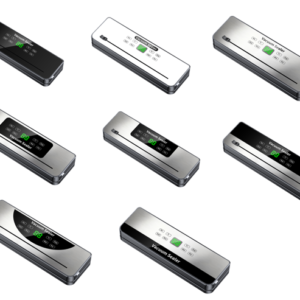
Vacuum Sealer, 75kPa, 30 cm Seal, Touch Screen, Temp Control
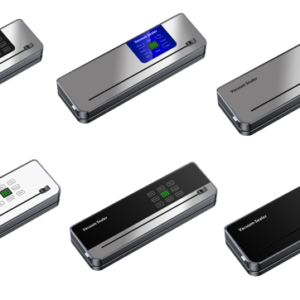
Vacuum Sealer, 75kPa, 30 cm Seal, Temp Control
Ready to order or need a wholesale quote?
Guilin Prime Household Products Co., Ltd. manufactures these vacuum sealers direct from our Guilin, China factory — OEM, private-label and B2B orders welcome. Tell us your target market and quantities for a factory-direct quote within 24 hours.