

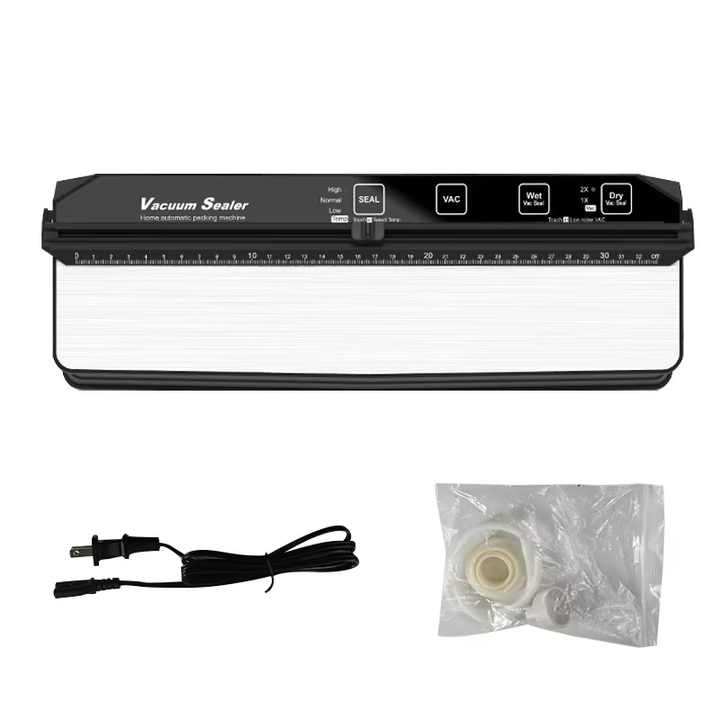
When you compare vacuum sealer quotes from different factories, the spec sheet is where most of the real decision-making happens. The trouble is that the numbers are not always defined the same way from one supplier to the next, and a higher figure does not always mean a better machine for your market. As a vacuum-sealing-machine manufacturer in Guilin, we field these questions every week from importers and retailers, so this guide breaks down the five specifications that matter most when you are sourcing units: suction in kPa, sealing width, motor wattage, duty cycle, and dry/moist modes.
Suction power (kPa): what the number actually means
Suction is usually quoted in kilopascals (kPa), and it describes how much air the pump can remove from the bag before sealing. It is measured as a vacuum gauge reading below atmospheric pressure. A typical handheld or compact countertop sealer sits in the 40-60 kPa range, mid-range external sealers reach 60-80 kPa, and stronger external units quote 80-90 kPa or higher.
Two cautions for buyers. First, a single peak figure tells you little on its own. Ask whether the kPa is the maximum reading or a sustained value, because a pump can spike to a high number briefly and then drop. Second, more suction is not automatically better. Very high vacuum can crush soft or delicate products such as bread, cake, or fresh berries, which is exactly why mode control (covered below) exists. For most consumer and light-commercial resale, 60-75 kPa is a practical sweet spot.
Sealing width and seal-bar length
These are two separate measurements, and confusing them leads to ordering mistakes.
Seal width
Seal width is the thickness of the weld the heating element lays down across the bag, commonly 2.2 mm, 3 mm, or a double 3 mm + 3 mm line. A wider or double seal is more forgiving with thicker bags and liquids, and it reduces the chance of a leak path forming along the weld.
Seal-bar length
Seal-bar length is how wide a bag the machine can close in one pass, often 28-32 cm on consumer units and 30 cm or more on light-commercial models. This caps the maximum bag width your end users can run, so match it to the products they will actually pack.
Motor wattage and what it tells you
Wattage describes the electrical power the pump motor draws, typically 90-130 W on compact units and 110-160 W on stronger external sealers. It is a rough proxy for pump capability, but treat it as supporting evidence rather than the headline number. A well-engineered pump can achieve good suction at lower wattage, while a poorly matched one can draw a lot of power and still underperform.
When you import, wattage matters for two practical reasons beyond performance:
- Voltage and plug type — confirm 110 V or 220-240 V build and the correct plug standard for your destination market before production.
- Certification scope — the motor and heating element are central to safety marks such as CE, UKCA, FCC, or PSE, so the electrical spec needs to match the approval you are selling under.
- Heat and noise — higher continuous wattage can mean more heat build-up, which ties directly into duty cycle.
Duty cycle: the spec retailers overlook
Duty cycle is how many seals a machine can perform in a row before it needs to rest and cool. It is frequently missing from consumer spec sheets, yet it is one of the most common drivers of returns when an end user packs a large batch in one session.
A budget consumer sealer may be rated for roughly 8-12 continuous cycles before a cool-down pause; a better-built unit handles 20 or more, and light-commercial machines are designed for near-continuous use. If your customers are home users sealing a few items, a modest duty cycle is fine. If you are selling to people who pack in bulk, such as hunters, fishers, meal-preppers, or small food businesses, ask the factory for the rated continuous cycle count and the recommended rest interval, and put it in your listing. Setting that expectation up front reduces complaints far more than any marketing claim.
Dry and moist modes
Most external sealers offer at least two sealing modes, and the better ones add pressure or texture options. The distinction is straightforward but important for buyers whose customers seal a range of foods.
- Dry mode uses a shorter heat-seal time, suited to dry goods like coffee, nuts, grains, and dehydrated items.
- Moist mode applies a longer seal time so the weld still forms cleanly when there is moisture or a little liquid near the seal line, as with marinated meat or fresh produce.
- Gentle or pulse vacuum lets the user stop suction before delicate items are crushed.
- Manual seal is handy for bag-on-roll cutting and for canisters or accessory hoses.
For a versatile resale unit, dry plus moist plus a manual seal button covers the great majority of household use. Canister and bottle-stopper accessory ports are a low-cost way to widen the perceived value of a kit.
Reading a spec sheet without getting misled
Bring these habits to every comparison. Ask whether kPa is peak or sustained. Separate seal-bar length from seal width. Treat wattage as context, not a ranking. Insist on a duty-cycle figure even when it is absent from the brochure. And confirm which modes are genuinely present rather than just printed on the box. A supplier who can answer all five clearly is usually one who tests the machines they ship.
Talk to the factory. We build vacuum sealers across the spec range described here, with OEM/ODM options, low minimum order quantities, and a 12-month warranty backed by direct-from-factory pricing to more than 56 countries since 2005. Browse our vacuum sealer range to see suction, sealing width, and mode options side by side, or request a quote and tell us your target market so we can match the right configuration to your customers.
Featured model
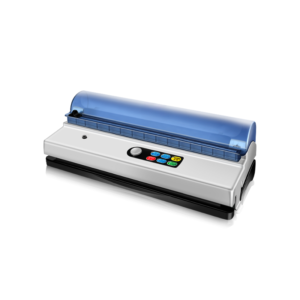
Automatic Vacuum Sealer, 80kPa, 32 cm Seal, Marination
A factory-direct automatic vacuum sealer engineered for 80kPa and 32 cm seal, featuring marination, from Guilin Prime Household Products. Available OEM/ODM with low MOQ and a…
from $54.86
Similar products
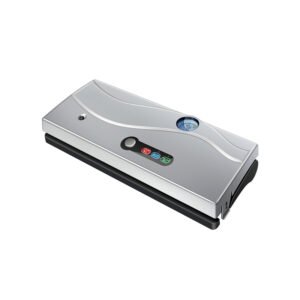
Automatic Vacuum Sealer, 80kPa, 32 cm Seal, Pressure Gauge
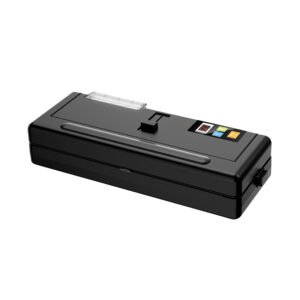
Automatic Vacuum Sealer, 80kPa, 28 cm Seal, Manual Nozzle
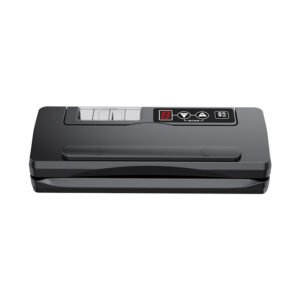
Automatic Vacuum Sealer, 80kPa, 28 cm Seal, Extended Nozz (VS-FW13)
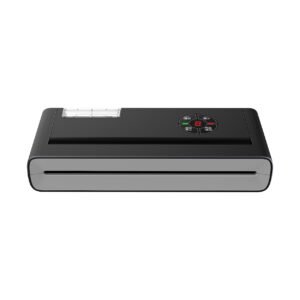
Automatic Vacuum Sealer, 80kPa, 28 cm Seal, Extended Nozzle
Ready to order or need a wholesale quote?
Guilin Prime Household Products Co., Ltd. manufactures these vacuum sealers direct from our Guilin, China factory — OEM, private-label and B2B orders welcome. Tell us your target market and quantities for a factory-direct quote within 24 hours.