
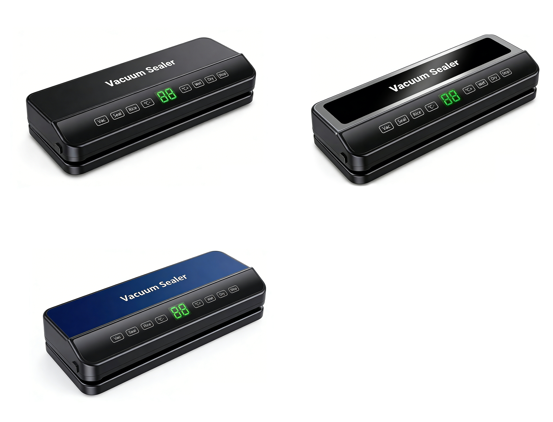
If you sell vacuum sealers under your own brand, the difference between a profitable program and a frustrating one usually comes down to choices you make before the first unit is built. Private label and OEM/ODM sound similar, but they commit you to very different timelines, costs and tooling. As a vacuum-sealing-machine manufacturer in Guilin that ships to importers and retailers in 56+ countries, we spend a lot of time helping buyers scope these programs correctly. This guide walks through what each path involves, where the real costs sit, and how to plan branding, packaging, voltage and lead times so there are no surprises at the port.
Private label vs OEM vs ODM: what you are actually buying
These three terms get used loosely, so it helps to define them the way a factory does, because each one changes the minimum order quantity (MOQ), tooling and schedule.
- Private label — you take an existing, proven model and put your brand on it. Logo on the housing, your artwork on the box, your manual and your model number. The machine itself is unchanged. Lowest cost, lowest MOQ, fastest to market.
- OEM — you specify changes to an existing platform: a different housing color, a custom control panel layout, your chosen bag width, or a specific accessory bundle. The base mechanism stays the same but the visible product is meaningfully yours.
- ODM — you brief a concept and the factory designs and engineers the product, including new tooling for the enclosure. This gives you a genuinely differentiated machine and design ownership, at the cost of higher tooling spend and a longer runway.
Most first programs start as private label or light OEM. ODM makes sense once you have validated demand and want a model competitors cannot simply copy from a catalog.
Custom branding: what can be changed and how
Branding is more than a sticker. On a vacuum sealer, the surfaces buyers notice are the housing, the control panel legend, the bag and accessory packaging, and the documentation. Here is how each is typically handled.
On the machine
Logos are applied by silk-screen printing, pad printing, or a custom-tooled badge. Silk-screen and pad printing are low-cost and suit flat or gently curved surfaces; a molded or metal badge looks more premium but adds a small tooling charge. A fully custom housing color needs a minimum batch because the plastic is color-matched at the molding stage rather than painted afterward — painting is possible but raises cost and is less durable.
On the control panel
Button legends (Seal, Vacuum & Seal, Pulse, Moist/Dry, Cancel) can be re-laid out and translated into your market’s language. Changing panel artwork usually means updating a printed overlay, which is inexpensive; changing the panel shape is a tooling job.
Packaging and documentation
Packaging is where many programs lose margin or run into compliance trouble, so treat it as part of the product spec, not an afterthought. A complete packaging brief should cover:
- Retail box — your artwork, barcode/EAN/UPC, multilingual feature callouts, and the carton dimensions that determine how many units fit a master carton and a pallet.
- Master carton — quantity per carton, gross/net weight and shipping marks, which directly affect your freight cost per unit.
- Inserts — quick-start card, full multilingual manual, warranty card, and any starter bags or roll.
- Compliance marks — the certification logos and safety text required for your destination market printed correctly on the box and rating label.
Ask for a physical pre-production sample of the full retail pack, not just a screen proof. Color on a printed carton can shift from what you see on a monitor, and it is far cheaper to correct artwork before the print run than after.
Voltage, plug and certification
This is the single most important technical decision and the one most likely to cause a rejected shipment if it is wrong. Vacuum sealers ship as either 110-120V or 220-240V, and the heating element and motor are matched to the input voltage — you cannot simply swap the plug on a unit built for the other region. Confirm the destination voltage before production, not after.
Plug type is a separate question from voltage. The same 220-240V machine can be fitted with a Type C (Europe), Type G (UK), Type I (Australia) or other plug depending on where it ships. Build a clear region matrix so the right voltage and plug pair every order.
- North America — 110-120V with a Type A/B plug.
- Europe — 220-240V with a Type C or Type F plug.
- United Kingdom — 220-240V with a fused Type G plug.
- Australia/New Zealand — 220-240V with a Type I plug.
Match certification to the market as well, since destination marks cover the relevant regional safety and electromagnetic-compatibility approvals. Tell the factory your target markets at the quotation stage so the right rating label, cord set and documentation are built in from the start.
Tooling: when you pay for it and what it covers
Tooling is the one-time cost of the molds and fixtures used to make custom parts. Private label needs little or none. Light OEM might need a small badge mold or a new panel overlay. ODM, with a new housing, requires injection molds — the largest tooling line item, amortized over your order volume, so a higher first order lowers the tooling cost per unit. Clarify mold ownership and storage terms up front to protect your design for future runs.
Realistic lead times
Plan backward from your on-shelf date. As a rough planning guide from order confirmation:
- Private label — sampling in days to a couple of weeks, then roughly 25-35 days for mass production depending on quantity and season.
- OEM — add time for artwork sign-off and any small tooling; typically 35-50 days for production.
- ODM — design and mold-making add the most; budget several weeks for tooling and first articles before the production clock starts.
Peak season before major holidays tightens capacity industry-wide, so reorder early and confirm the schedule in writing. A low MOQ and a 12-month warranty give you room to test a model in market before committing to a larger, more customized run.
Talk to the factory
Whether you are starting with a private-label batch or scoping a full ODM program, the fastest route to a clean quotation is to share your target markets, branding goals and volumes so we can map the right voltage, plug, packaging and tooling from the outset. Browse our vacuum sealer range to see the platforms we customize, then request a quote and we will send back a clear spec, MOQ and lead time.
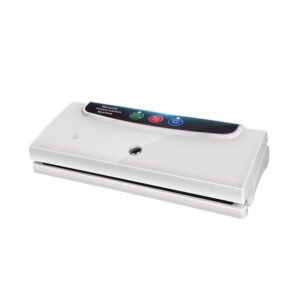
Featured model
Commercial Vacuum Sealer, 80kPa, 32 cm Seal, 150W
A factory-direct commercial vacuum sealer engineered for 80kPa and 32 cm seal from Guilin Prime Household Products. Available OEM/ODM with low MOQ and a 12-month warranty…
from $23.40
Similar products
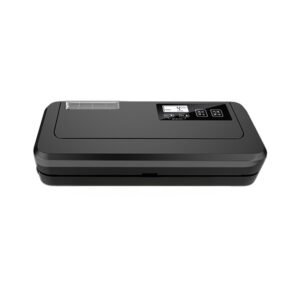
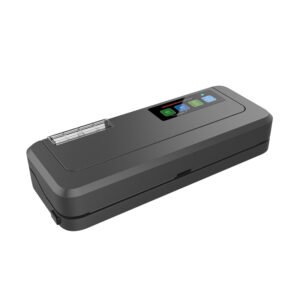
Commercial Vacuum Sealer, 80kPa, 29 cm Seal, Touch Control
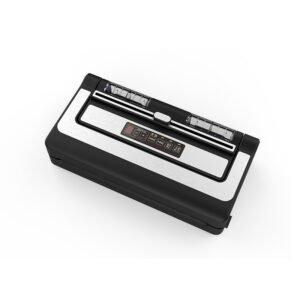
Commercial Vacuum Sealer, 80kPa, 29 cm Seal, Auto Nozzle
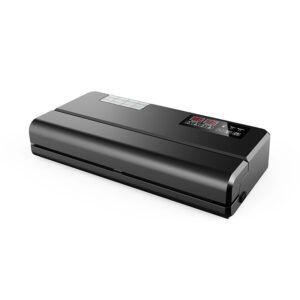
Commercial Vacuum Sealer, 80kPa, 30 cm Seal, Dual Pump
Commercial Vacuum Sealer, 80kPa, 40 cm Seal, Touch Control, Dual Pump
Ready to order or need a wholesale quote?
Guilin Prime Household Products Co., Ltd. manufactures these vacuum sealers direct from our Guilin, China factory — OEM, private-label and B2B orders welcome. Tell us your target market and quantities for a factory-direct quote within 24 hours.